
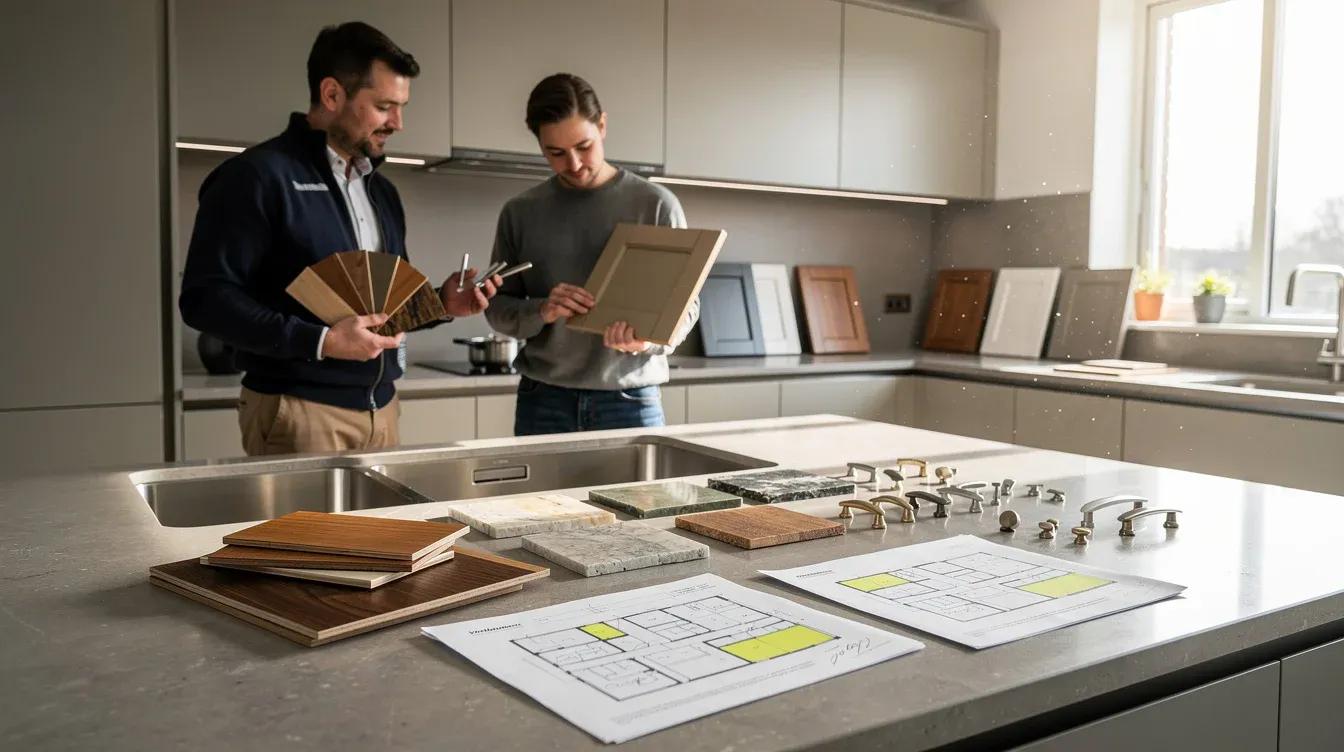
Your kitchen is the heart of your Dubai home, and a poorly designed space can compromise both comfort and functionality. Bespoke kitchens in Dubai offer the perfect solution, allowing you to create a space tailored to your lifestyle, climate needs, and architectural style.
However, designing a custom kitchen involves critical decisions that can make or break your investment. This guide walks you through essential do’s and don’ts to help you avoid costly mistakes and achieve a kitchen that truly works for you.
What Makes a Bespoke Kitchen Work in Dubai
Plan Your Layout Around How You Actually Cook
Map how you actually cook and move through your kitchen, not how you think you should. Dubai kitchens often serve multiple functions-entertaining, daily family meals, and sometimes catering for gatherings-which demands careful spatial planning. Measure your current kitchen usage patterns over a week: which appliances you use most, where you spend the most time, and what frustrates you daily. This data drives layout decisions far better than Pinterest inspiration. Position your cooktop, sink, and refrigerator to form an efficient work triangle that minimizes unnecessary steps, especially important in Dubai’s heat where efficiency reduces time spent in a hot kitchen. If you entertain frequently, ensure your layout accommodates movement between kitchen and dining areas without congestion.
Invest in Quality Materials Built for Dubai’s Climate
Quality materials become non-negotiable in Dubai’s climate. High-gloss finishes, while visually appealing, show fingerprints constantly and attract dust in the sandy environment-matte or textured finishes perform better. Invest in stainless steel or powder-coated aluminum frames that resist humidity and salt air, particularly if your home sits near coastal areas. Countertops must handle extreme temperature fluctuations; granite and engineered quartz outperform laminate, which delaminates under Dubai’s intense UV exposure and heat cycles. Cabinetry should use moisture-resistant materials like plywood with marine-grade veneers rather than particle board, which swells when humidity spikes during summer air conditioning cycles. Budget 30 to 40 percent more for premium materials, but this extends your kitchen’s lifespan from five years to fifteen or twenty years, making it genuinely economical.
Work with Designers Who Understand Dubai’s Specific Constraints
Your designer must understand Dubai’s specific architectural constraints and climate demands. Many kitchens here feature open-plan layouts with limited ventilation options, requiring powerful extraction systems to handle cooking odors and humidity-standard ventilation won’t suffice. Designers familiar with Dubai homes know that electrical and plumbing infrastructure often runs through concrete columns or requires creative routing, affecting appliance placement and costs. They understand thermal insulation requirements for kitchens exposed to afternoon sun and can recommend window treatments or material choices that reduce heat absorption. Experienced designers also navigate Dubai’s customs and import processes for specialty items, preventing delays and unexpected expenses. They know which finishes perform well against the region’s specific dust patterns and which don’t. Choose a designer who has completed at least fifteen kitchens in Dubai, can show you local projects, and understands the difference between designing for Gulf region climates versus European or North American environments.
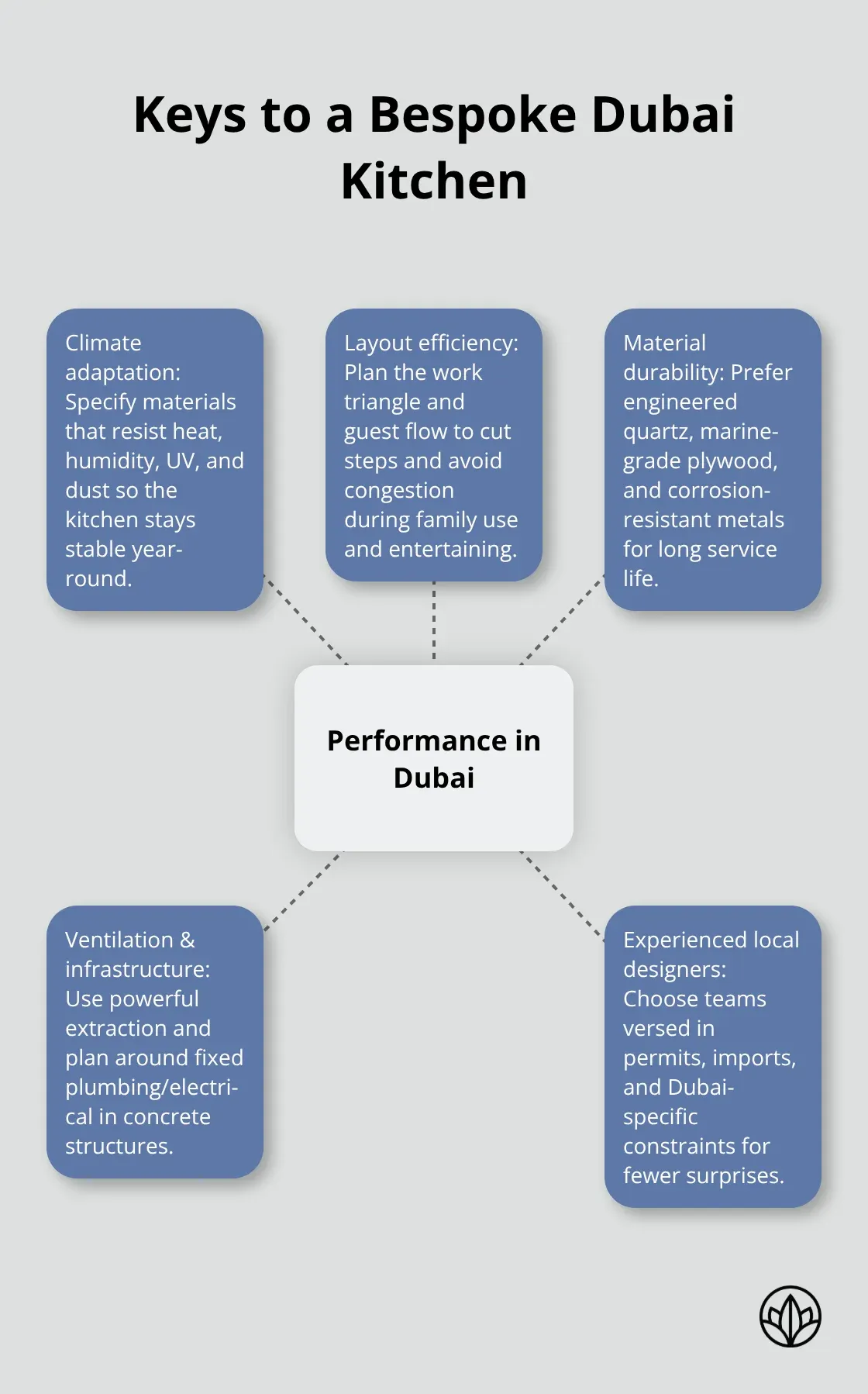
Understanding these foundational principles positions you to make informed decisions about the specific customization options and material selections that will define your kitchen’s performance and longevity in Dubai’s unique environment.
What Mistakes Kill Bespoke Kitchen Projects in Dubai
Measure Three Times, Install Once
Precision in measurements separates kitchens that function flawlessly from those that create daily frustration. Most homeowners measure their kitchen once, eyeballing dimensions and trusting memory-this approach consistently produces errors of 2 to 5 centimeters, which becomes catastrophic when appliances arrive and cabinetry won’t fit. You must measure every wall three times at different heights because Dubai’s older villas frequently have walls that aren’t perfectly square or plumb, and modern developments sometimes have structural columns that intrude into kitchen spaces unexpectedly. Photograph every corner, document outlet and switch locations with precise measurements from reference points, and note where pipes or electrical conduits run behind walls. You also need to account for door swing clearance, refrigerator handle protrusion, and the space required to fully open oven doors and dishwasher drawers-these oversights force expensive modifications after installation. Your designer must verify measurements in person; virtual consultations or reliance on developer floor plans leads to costly surprises.
Select Appliances Before Cabinetry
Planning appliance placement before selecting cabinets prevents the devastating scenario where your dream cabinet layout cannot accommodate the appliances you actually want. Choose your cooktop, refrigerator, and oven models first, then build your kitchen around them rather than the reverse. This sequence ensures that your layout works with real dimensions and specifications, not theoretical assumptions about how appliances might fit.
Reject Style Over Storage and Function
Style obsession destroys functionality faster than any other mistake in Dubai kitchens. Homeowners often prioritize aesthetic trends-minimalist handleless cabinetry, statement backsplashes, or trendy finishes-then discover their kitchen lacks adequate storage or work surfaces. In Dubai’s climate, open shelving that looks Instagram-perfect becomes a dust-collection nightmare within weeks, requiring constant cleaning. Handleless cabinets look sleek but create accessibility issues, particularly problematic in households with elderly relatives or children. Deep drawers and clever storage solutions must take priority over visual statements; your kitchen must function for fifteen years, not photograph well for six months.
Account for Dubai’s Extreme Climate Demands
Climate considerations cannot be secondary decisions. Kitchens facing west or southwest in Dubai experience afternoon temperatures exceeding 50 degrees Celsius, which causes thermal stress on materials and makes the space unbearably hot during cooking hours. Standard ventilation systems prove inadequate; you need extraction systems rated for adequate air changes per hour, not the 300 to 400 most homeowners assume is sufficient. Humidity during summer air conditioning cycles can spike to 70 percent, which warps wood cabinetry and causes adhesive failure in laminated countertops unless materials specifically resist moisture. Ignore these climate factors and your kitchen deteriorates visibly within three to five years, with peeling finishes, warped doors, and discolored surfaces.
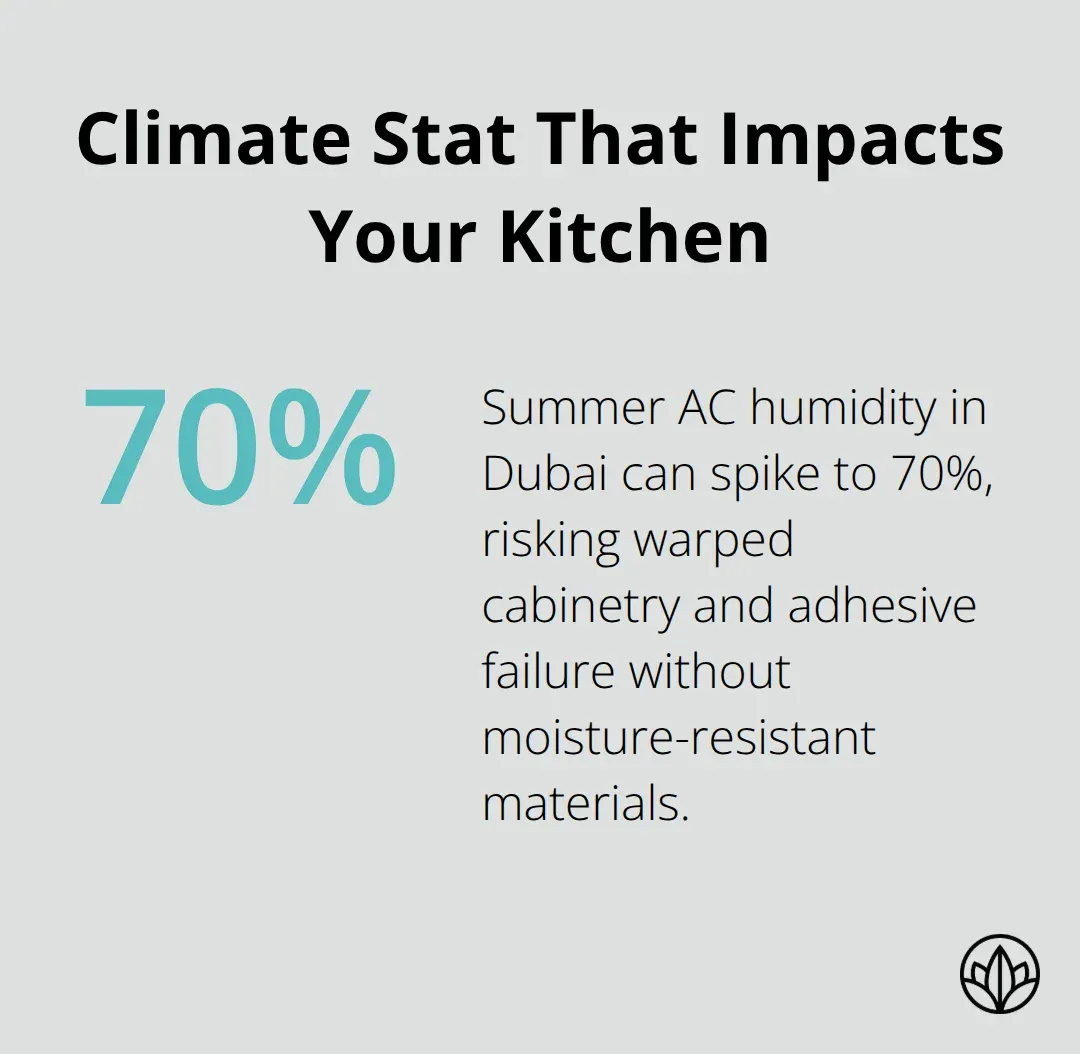
The decisions you make about measurements, appliance selection, and climate adaptation directly determine which materials and finishes will actually perform in your Dubai home-topics that demand equal attention as you move forward with your customization strategy.
Customizing Your Kitchen to Dubai’s Architecture and Climate
Adapt Your Design to Your Home’s Specific Structure
Dubai’s architectural diversity demands kitchens that adapt rather than impose. Villas built in the 1990s feature cramped kitchens with load-bearing walls that restrict open-plan layouts, while newer developments offer expansive spaces with floor-to-ceiling windows that create thermal challenges. Your kitchen design must work with your home’s specific structure, not against it. If your villa has concrete columns intruding into the kitchen zone, integrate them into your design rather than fighting them-treat a column as a natural anchor for an island or storage wall. Homes with extensive glazing on western or southern exposures need kitchens with strategic material placement to minimize heat absorption; position your cooktop away from direct afternoon sun and specify low-emissivity glass for windows if renovation permits. Modern apartment kitchens in Dubai often feature fixed plumbing and electrical runs through shared walls, which means your designer cannot relocate sink or cooktop freely. Understanding these constraints before finalizing your design prevents expensive modifications during installation.
Select Finishes That Withstand Dubai’s Environmental Stress
Durable finishes separate kitchens that age gracefully from those that deteriorate visibly within years in Dubai’s environment. Matte lacquered cabinetry outperforms gloss finishes in this climate because matte absorbs grime and hides tiny dust particles, while gloss highlights each fingerprint and requires frequent cleaning. Engineered quartz countertops resist thermal shock far better than natural stone-quartz handles temperature changes remarkably well without developing thermal stress cracks and offers a lifespan of 20-25 years. Stainless steel appliances must be 304-grade or higher; lower grades corrode from salt air exposure near coastal areas within eighteen months. Backsplashes should use porcelain tiles rather than natural stone because porcelain resists moisture penetration and won’t harbor mold during humidity spikes.
Compare Modular and Fully Custom Kitchen Solutions
Fully custom kitchens allow you to specify every material with precision, but modular systems limit finish options significantly. Modular kitchens cost 40 to 50 percent less upfront and install faster, typically completing within four to six weeks, making them suitable for rental properties or temporary arrangements. Fully custom kitchens require ten to fourteen weeks for manufacturing and installation but deliver material choices optimized for your specific space and climate exposure. Try modular if your priorities are speed and budget; try fully custom if you plan to remain in your home beyond five years and want materials engineered for Dubai’s specific demands rather than generic solutions.
Final Thoughts
Your bespoke kitchen in Dubai represents a significant investment that will either serve your home beautifully for decades or require costly repairs within years. The decisions you make during planning directly determine your kitchen’s performance and longevity in Dubai’s climate and architectural landscape. Prioritize accurate measurements, quality materials engineered for heat and humidity, and experienced local designers to prevent expensive mistakes that compromise functionality.
Budget expectations for bespoke kitchens in Dubai range from AED 40,000 to AED 150,000 depending on whether you choose modular or fully custom solutions. Modular kitchens complete installation within four to six weeks at lower cost, while fully custom kitchens require ten to fourteen weeks but deliver materials optimized specifically for Dubai’s environmental demands.
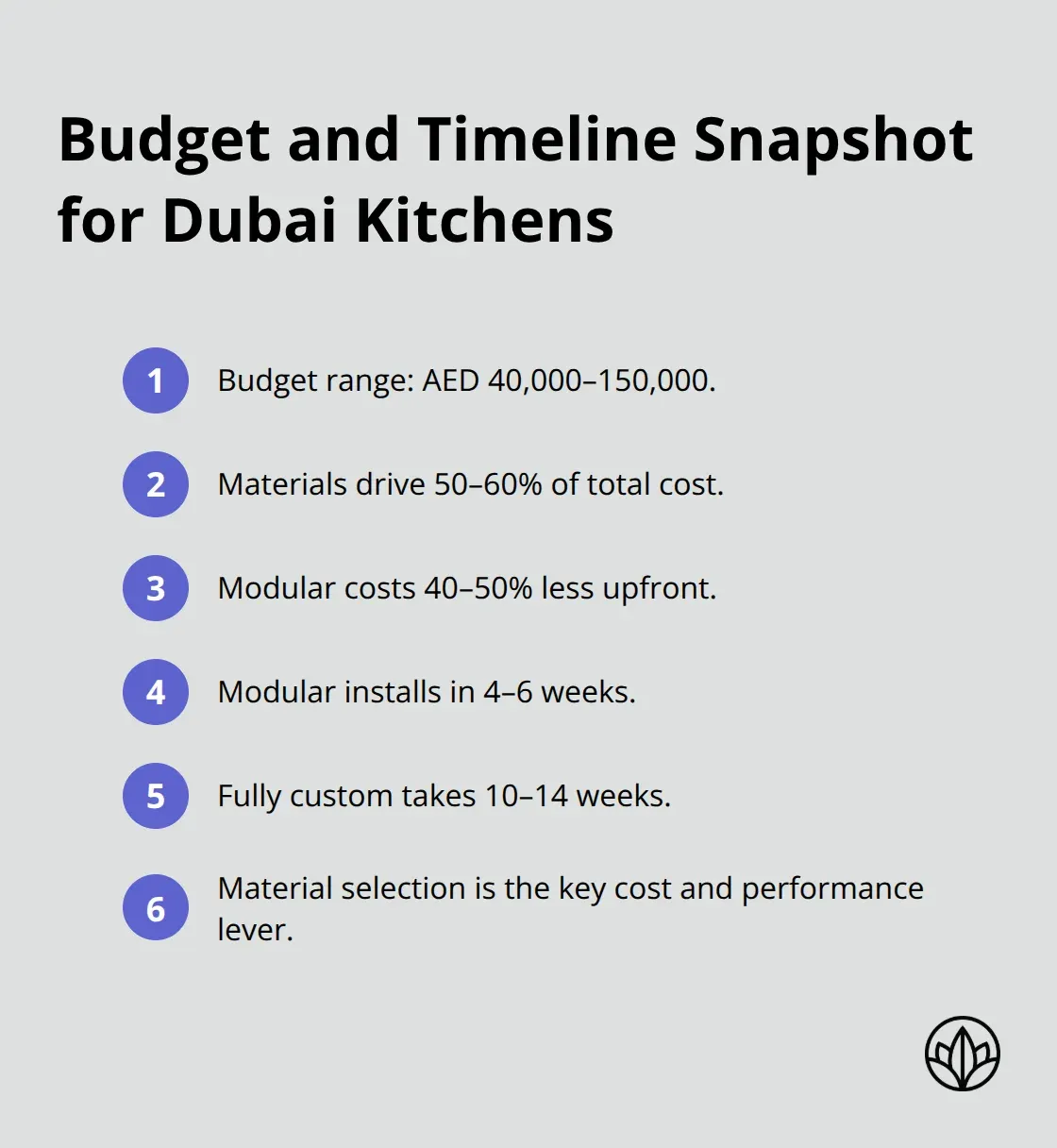
Material costs represent 50 to 60 percent of your total budget, with labor and installation comprising the remainder, making material selection the primary driver of both cost and performance.
Schedule a consultation with designers experienced in bespoke kitchens that Dubai homeowners actually live with long-term. A professional kitchen consultation identifies structural constraints, climate challenges, and customization opportunities specific to your home, transforming abstract ideas into a functional design that works for your lifestyle. Contact us today to schedule your free bespoke kitchen consultation and begin designing the kitchen your Dubai home deserves.
Cordoba Interior Factory | Premium Bespoke Joinery. Serving Dubai & Sharjah. Custom kitchens, wardrobes, and luxury wall paneling crafted to perfection with no minimum order limit. Request a Free Quote Today!