
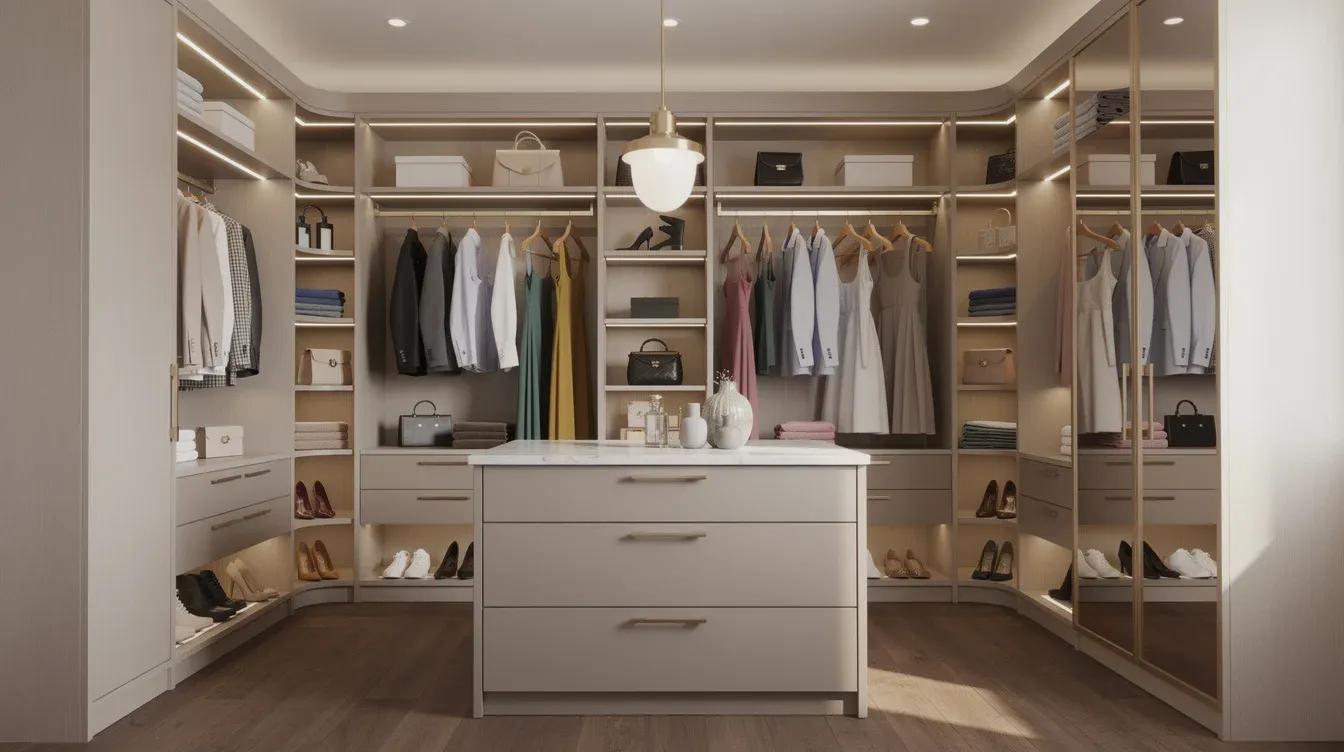
Dubai’s intense heat, humidity, and dust demand walk-in closets designed with climate resilience in mind. Standard storage solutions fail in the UAE’s extreme conditions, leaving fabrics faded and materials warped within months.
Whether you’re in Dubai or nearby areas like Sharjah, this guide reveals essential practices that protect your wardrobe while maximizing limited apartment space. Learn what works, what doesn’t, and how professional design transforms your closet into a climate-controlled sanctuary.
Building Walk-In Closets That Survive Dubai’s Climate
Dubai’s relentless heat and humidity destroy poorly designed closets within months, making climate resilience non-negotiable. The UAE experiences temperatures exceeding 50°C in summer, coupled with humidity levels that swing between 30% and 90% depending on season and proximity to the coast. This combination warps wood, fades fabrics, and corrodes metal fixtures faster than anywhere else in the world. Your walk-in closet must combat these conditions aggressively, not passively.
Maximize Vertical Space and Material Selection
Start with vertical storage that reaches floor-to-ceiling, because horizontal layouts waste precious square footage in Dubai’s compact apartments and villas. Shelving should extend 2.4 to 2.7 meters high, utilizing every centimeter of wall space while keeping frequently worn items at arm level. Install climate-control systems specifically calibrated for the UAE environment-a dedicated dehumidifier maintains 45–50% relative humidity and protects garments far more effectively than general air conditioning alone. Humidity above 60% accelerates mold growth and material degradation; below 30% causes static and brittleness.
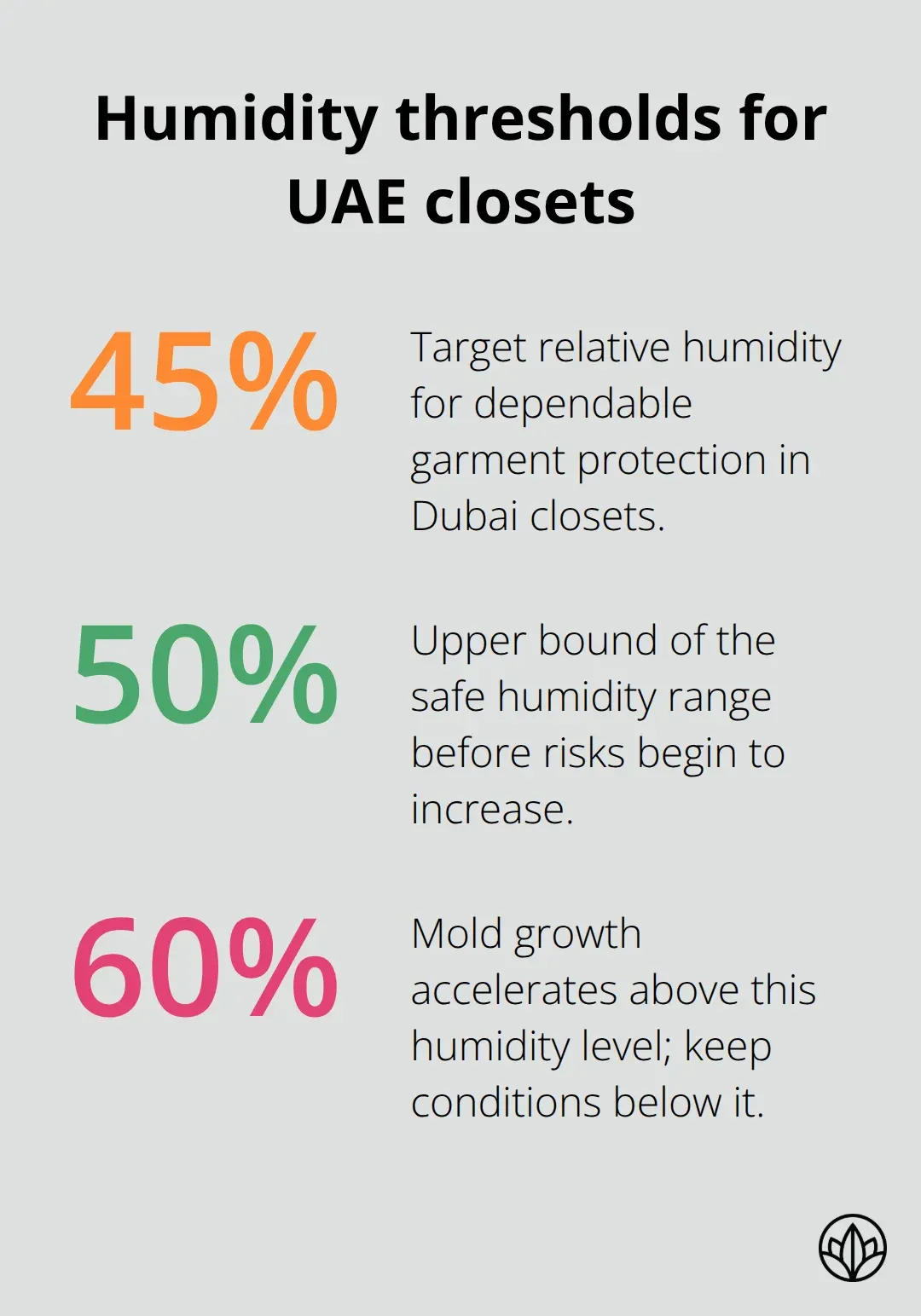
Invest in materials engineered for desert conditions: powder-coated aluminum frames resist rust better than stainless steel in high-salt-content air, melamine-faced boards outperform solid wood, and commercial-grade vinyl-wrapped surfaces tolerate temperature swings without peeling. These specifications ensure your closet withstands Dubai’s extreme climate zones without deterioration.
Ventilation That Actually Works
Standard closet ventilation fails in Dubai because it assumes temperate climates. Install active ventilation-not just passive air gaps-with a small inline fan that cycles air 3–4 times daily and prevents stagnant pockets where moisture collects. Position vents low and high on opposite walls to create cross-flow and eliminate dead zones.
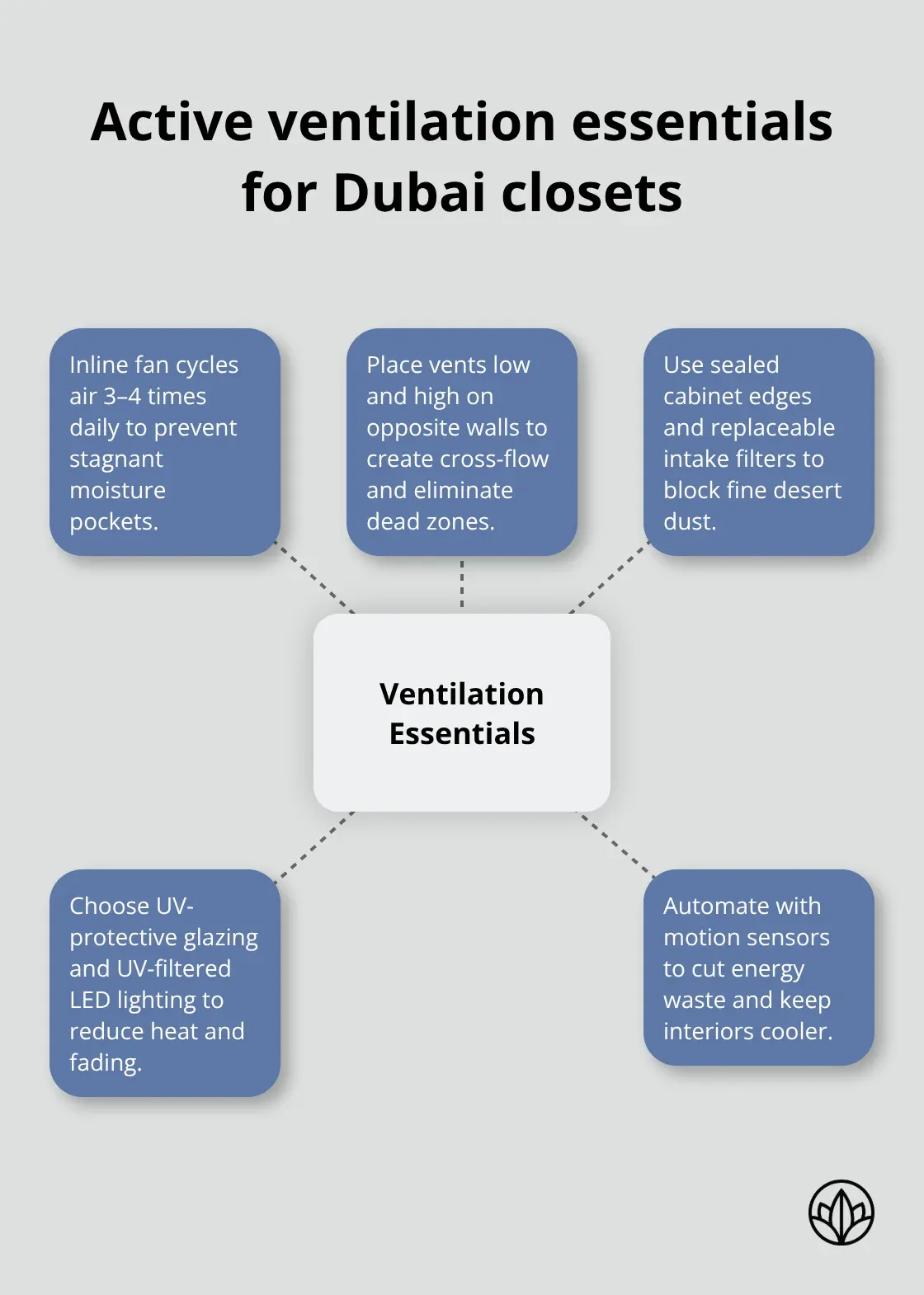
UV-protective glass doors or frosted panels prevent direct sunlight from bleaching contents while allowing air circulation; standard transparent glass offers zero UV filtering and accelerates fading within weeks. Lighting must incorporate UV-filtered LED fixtures rated for 4000–5000 Kelvin, which mimics daylight without the damaging spectrum. Motion-sensor lights reduce electricity waste in Dubai’s high-energy environment while keeping closet interiors cooler. Dust infiltration from external sources requires sealed edges on all storage units and replaceable air filters on ventilation intakes-a detail most Dubai homeowners overlook until their whites turn grey from fine desert dust accumulation.
Smart Storage and Security Integration
Dubai’s high-value properties demand integrated security within walk-in closet design. Install RFID-enabled inventory systems that track garment location and usage patterns, reducing time spent searching and preventing climate-controlled areas from remaining open longer than necessary. Temperature and humidity sensors connected to smartphone apps alert you immediately if conditions drift outside safe parameters, allowing rapid intervention before damage occurs.
Motion-activated security cameras integrated into closet lighting systems deter theft in villas and ensure accountability in shared properties. Smart shelving with adjustable heights accommodates seasonal wardrobe rotations without structural modification, critical for Dubai residents who shift between heavy winter imports and lightweight summer pieces multiple times yearly. These integrated systems transform your closet from static storage into a responsive, protective environment that adapts to your lifestyle and Dubai’s demanding climate.
What Mistakes Destroy Walk-In Closets in Dubai Heat
Ventilation Failures That Trap Moisture
Inadequate ventilation in Dubai’s heat does not just feel uncomfortable-it accelerates material degradation and creates mold colonies within weeks. Most homeowners install passive vents or rely solely on central air conditioning, a critical miscalculation because stagnant air pockets inside enclosed closets reach 60–70% humidity even when your villa’s main temperature sits at 22°C. Active ventilation with an inline fan cycling air 4–6 times daily becomes non-negotiable; without it, moisture condenses on metal fixtures and wooden shelves, corroding hardware and warping boards regardless of material quality. Standard closet doors with minimal gaps trap humid air that central AC cannot penetrate, making the closet interior a separate microclimate where your clothes deteriorate faster than in any other room. Install ducted ventilation with replaceable filters rated for fine desert dust, since ordinary household filters clog within 30 days in Dubai and stop functioning entirely by day 45.
Glass Selection and Lighting Errors
UV-protective glass doors represent the difference between clothes that fade within 6 months and garments that maintain color for years. Regular transparent glass offers zero UV filtration; sunlight streaming through standard glazing bleaches dark fabrics to grey and turns whites yellow through a process that accelerates in the UAE’s intense solar radiation at 2,200 kilowatt-hours per square meter annually. Install UV-blocking film or frosted glass panels rated at minimum 99% UVA/UVB rejection, paired with LED lighting using 4000 Kelvin color temperature to eliminate the damaging spectrum standard incandescent bulbs emit. Avoid halogen lights entirely-they generate excessive heat that compounds temperature fluctuations inside enclosed spaces and waste energy in Dubai’s already demanding climate.
Material Degradation in Desert Conditions
Material selection determines whether your closet survives five years or requires complete renovation within two. Solid wood warping happens predictably in Dubai: wood absorbs moisture when humidity spikes above 55% and shrinks when it drops below 35%, creating visible gaps and misaligned doors after 18 months. Powder-coated aluminum frames withstand these cycles without visible damage; stainless steel fixtures corrode faster than aluminum in coastal Dubai areas due to salt-laden air penetrating marine environments. Leather handles tarnish and crack within months unless treated with specialized desert-climate sealants, making synthetic leather alternatives substantially more practical for walk-in closets. Temperature swings of 25°C between morning and evening accelerate material fatigue; adhesives fail, veneer peels, and hinges misalign when manufacturers specify materials designed for stable climates. Specify materials tested for 50°C+ temperatures and humidity ranges of 20–90%, requirements that eliminate most standard European wardrobe systems sold in Dubai and demand locally engineered solutions that account for the region’s extreme environmental demands.
Fitting Luxury Storage Into Dubai’s Compact Spaces
Dubai’s apartment layouts demand closet designs that sacrifice nothing despite spatial constraints. The average Dubai apartment offers 120–150 square meters with master bedrooms averaging just 4 by 5 meters, leaving minimal wall space for traditional walk-in closets that consume 2 by 2.5 meters minimum.
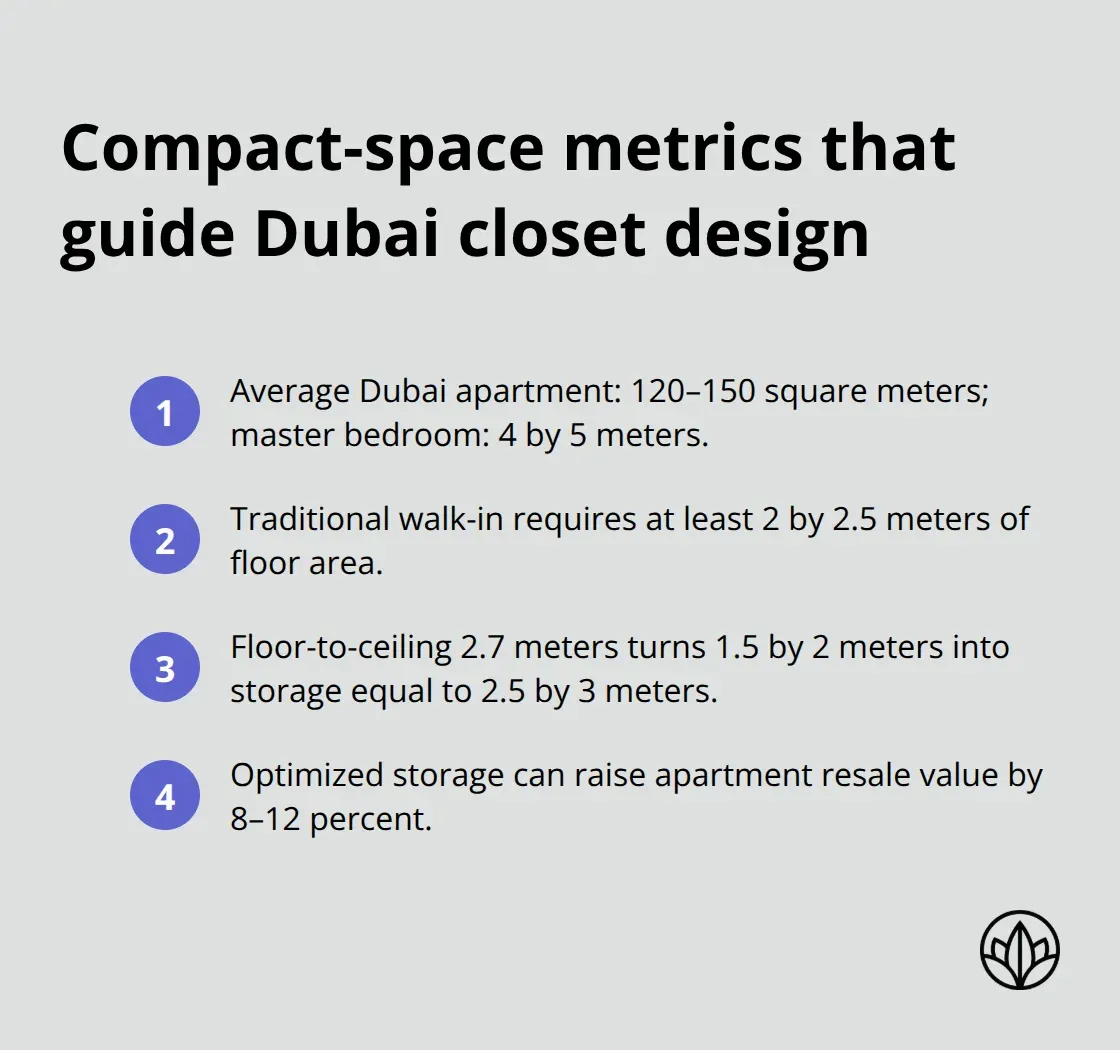
Vertical thinking combined with material engineering prevents expansion and contraction from destabilizing your storage system. Floor-to-ceiling installations reaching 2.7 meters transform a cramped 1.5 by 2 meter space into functional storage equivalent to a 2.5 by 3 meter conventional closet, a transformation that justifies the investment immediately when your apartment’s resale value increases by 8–12 percent according to Dubai real estate analysis.
Maximize Vertical Space Without Structural Compromise
Powder-coated aluminum frames remain dimensionally stable across Dubai’s temperature swings, unlike solid wood that expands when humidity climbs above 60 percent and contracts when it drops below 40 percent. Visible gaps and misaligned shelves emerge within months when materials fail to withstand these cycles. Install adjustable shelving on a rail system rather than fixed brackets, allowing you to reconfigure storage without drilling additional holes that compromise structural integrity and create pathways for dust infiltration common in Dubai’s desert environment. This modular approach accommodates seasonal wardrobe shifts without renovation costs, critical for residents rotating between winter imports and lightweight summer pieces three to four times yearly.
Select Materials That Resist Dubai’s Climate
Melamine-faced boards outperform solid wood in Dubai’s climate, maintaining dimensional stability while resisting the mold growth that thrives in high-humidity coastal areas. Material selection determines whether your compact closet survives five years without degradation. Integrate smart shelving with RFID tracking systems that monitor garment location and prevent you from purchasing duplicate items, a common mistake that wastes the limited space available in compact Dubai apartments.
Deploy Smart Technology for Climate and Security Control
Temperature and humidity sensors connected to smartphone applications alert you immediately if conditions drift outside safe parameters of 45–50 percent relative humidity and 18–22°C. Rapid intervention prevents damage before your investment suffers. Motion-activated LED lighting with 4000 Kelvin color temperature illuminates every corner without generating excess heat that compounds temperature fluctuations, while motion sensors ensure lights extinguish automatically and reduce electricity consumption in Dubai’s energy-intensive climate. Security integration through motion-activated cameras and RFID inventory systems transforms compact closets into protected environments that safeguard high-value garments and accessories, essential for villas and apartments where theft risks justify technological investment.
Partner With Local Manufacturers for Precision Solutions
Bespoke wardrobe systems engineered specifically for Dubai’s extreme climate and spatial constraints deliver precision-built solutions that eliminate middleman costs. Direct factory manufacturing guarantees solutions tailored to your apartment’s exact dimensions and environmental demands, ensuring your compact closet performs reliably across years of use. A comprehensive warranty covering material degradation from environmental exposure protects your investment against the region’s harsh conditions.
Final Thoughts
Your walk-in closet protects your wardrobe investment against Dubai’s heat, humidity, and dust that destroy poorly designed systems within months. The practices outlined throughout this guide address environmental challenges that make standard solutions fail across the UAE, whether you design a space in Dubai or nearby areas like Sharjah. Implementing vertical storage with climate-control systems, selecting materials engineered for extreme temperature fluctuations, and integrating active ventilation with UV-protective elements transforms your closet into a resilient environment that performs reliably for years.
Professional design consultation becomes essential when your closet must simultaneously maximize limited space, withstand environmental extremes, and incorporate security technology. Local manufacturers understand Dubai’s specific climate demands and spatial constraints in ways that generic wardrobe systems cannot address-they engineer solutions calibrated to your apartment’s exact dimensions, humidity patterns, and temperature cycles. Schedule a consultation with a Dubai-based design specialist who can assess your space, evaluate your climate control requirements, and recommend materials tested for the region’s harsh conditions.
Specify your needs clearly when contacting a design firm: desired storage capacity, security features, smart technology integration, and timeline for completion. Request references from recent projects in similar Dubai properties and verify warranty coverage for environmental degradation. Transform your closet from a source of frustration into a protected sanctuary where your wardrobe thrives by connecting with a local design firm today.
Cordoba Interior Factory | Premium Bespoke Joinery. Serving Dubai & Sharjah. Custom kitchens, wardrobes, and luxury wall paneling crafted to perfection with no minimum order limit. Request a Free Quote Today!